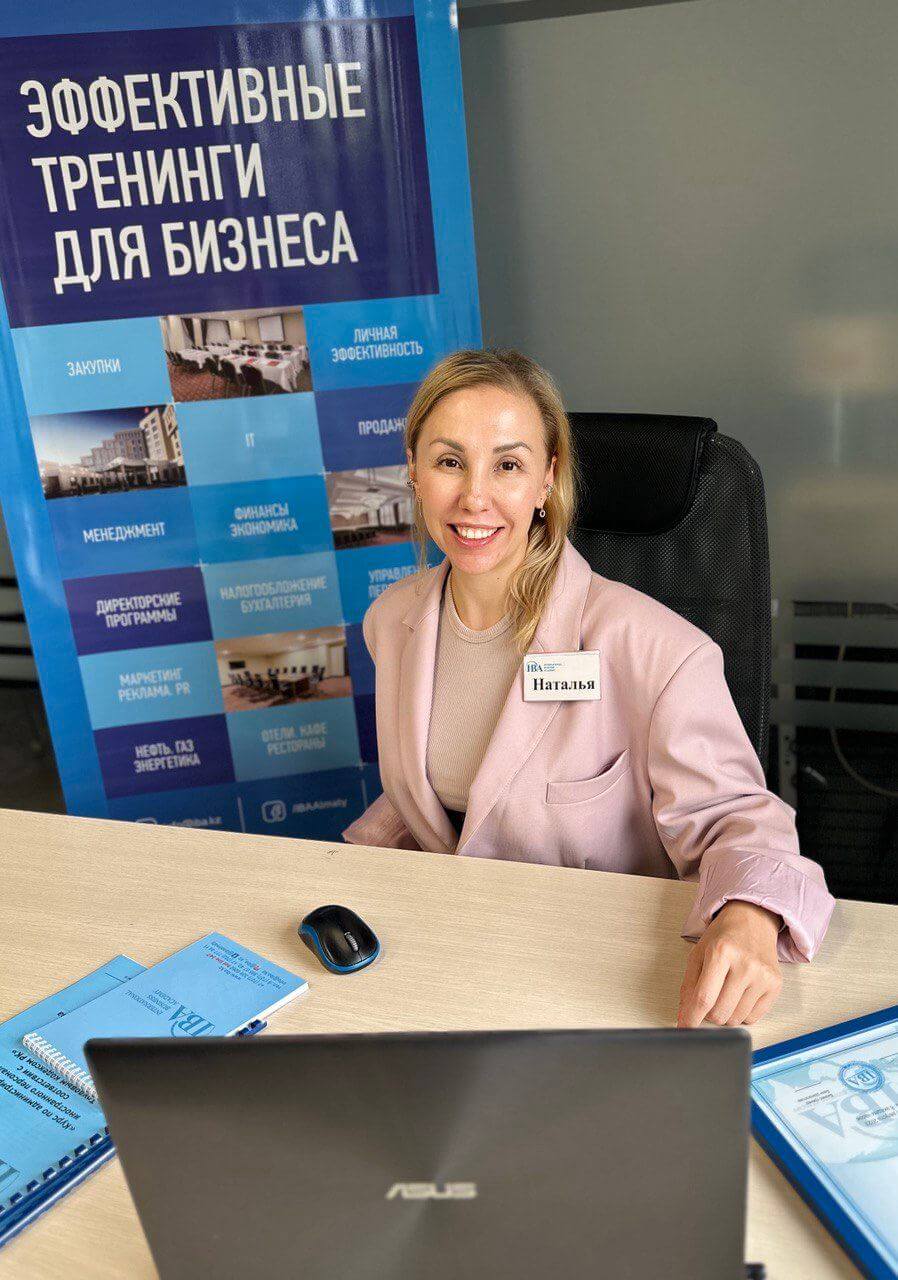

The seminar can be held online on the official International Business Academy platform. On completion of the training you will be given a link to the recording, which will be available for one month.
*dates are subject to additional confirmation
excluding VAT
* VAT of 16% will be added to the invoice
Abstract. The effectiveness of a business's existence and development largely depends on strategic IT management, since IT systems are one of the most important competitive advantages. Well-built business and IT strategies and the use of management standards and world practices create the conditions for the rational use of IT systems, which in turn make it possible to manage the business effectively. This training systematises the best experience of strategic IT management. It introduces the existing standards and practices in IT management, the fundamentals of long-term planning and methods for choosing effective ways of managing the various components of IT, including some important aspects of HR management.
The training includes solving practical problems taken from the life of real organisations. This makes it possible to discuss and work through practical solutions for implementation in participants' organisations. Participants learn to think systematically about problems and take that thinking through to formalised solutions that they can present and defend.
Target audience:
Training objectives: To build the knowledge and skills needed to apply a systems approach to analysing the company and to creating and monitoring the execution of an IT organisation development strategy (IT Strategy), including budgeting.
On completing the training, specialists will be able to:
Prerequisites:
In addition to methods and practical skills, participants will receive (in electronic form) a set of documentation, standards and books needed to plan and implement changes to the IT organisation's management system.
Trainer: Igor Vladimirovich Chichyov, accredited ITSM trainer, Microsoft certified trainer from 2002 to 2015. Consulting experience in systematising (improving) service management (ITSM) processes and project management processes since 2003 (more than 15 years). Experience in IT since 1995 (more than 25 years).
(Days 1, 2 and 3 — are the core of the training, the mandatory programme).
Days 4 and 5 can be added or removed, changing the duration of the training from 3 to 5 days depending on the Customer's needs.
Day 1
Day 2
1. Purpose and objectives of strategic analysis and of creating a «Service and Product Development Strategy».
2. Conducting a strategic analysis of the IT organisation. Analysing the external and internal environment, identifying existing unrealised opportunities and constraints.
3. Gap analysis, STEP and SWOT analysis. Determining the IT organisation's position relative to Customers and other service providers. Defining the list of Services / Products and customer niches (market spaces) to ensure competitiveness.
Day 3
1. Assessing the maturity (capability) level of processes as an integral part of assessing the current and target state of the IT organisation. Identifying target (desired) process maturity levels. Analysing the current process capability level.
2. Target state definition: describing the final (target) state of IT in terms of strategic perspective and position.
3. Aligning (or revising) the IT organisation's development prospects with the Business. Describing the goals and mission of the IT organisation (Service provider). Justifying investment in the development of IT systems, IT services and Products.
4. Forming the strategic development plan including:
5. Translating (converting) strategic plans into tactical and operational actions (specific steps).
Day 4
1. Financial management in IT
2. Budgeting. Developing the IT budget based on IT development plans (capital expenditure) and current costs (operating expenditure).
Practical work: drawing up the company budget based on development plans and analysis of operating costs.
Day 5
1. Important aspects of HR management