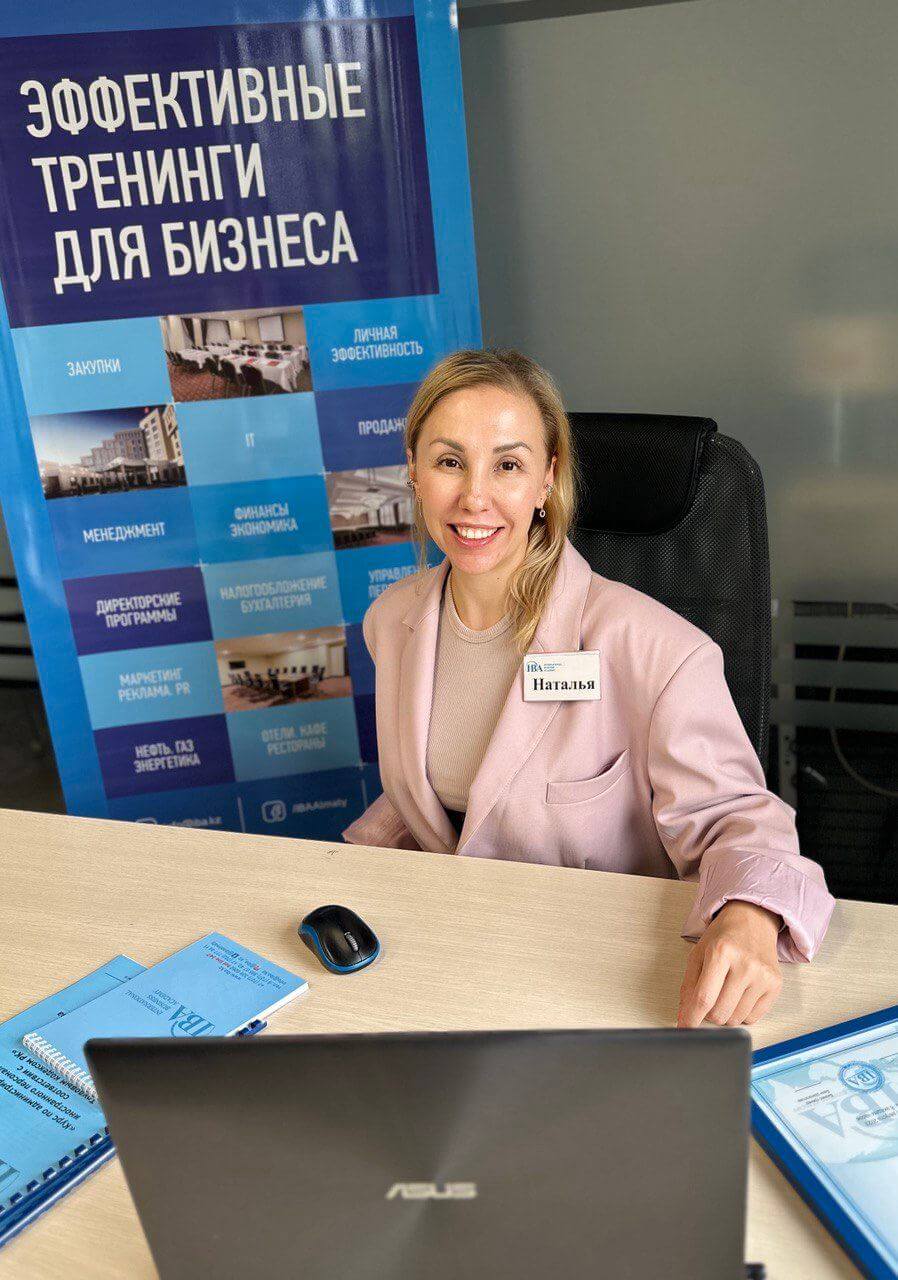

The seminar can be held online on the official International Business Academy platform. On completion of the training you will be given a link to the recording, which will be available for one month.
*dates are subject to additional confirmation
excluding VAT
* VAT of 16% will be added to the invoice
The appearance in 1992 of the ITIL v.2 library of books grouped the knowledge accumulated by then in the field of organising IT processes and effectively marked the start of the active use of the methodology in practice. The books gave exhaustive answers to the questions «What needs to be done?» and justifications of «Why does it need to be done?», but the methodology gave no answer to the question «How should it be done?». This was its main shortcoming. That shortcoming was effectively eliminated with the release of the next version of the library, ITIL v.3. The new set already consists of 5 much larger books and covers all the practical issues of implementing IT processes quite well.
However, the statistics on applying the methodology in practice left much to be desired: the percentage of successfully implemented projects remained not very high, despite the availability of books, quality trainings and consulting. Axelos (www.axelos.com, the current owner of the ITIL methodology) considered the main reason for unsuccessful or low-yield projects in this field to be the complexity of implementing projects of this kind. The factors that must be taken into account when making changes are briefly indicated in ITIL (the principles of «Continual Improvement», «4P», etc.), but «How to organise this project correctly and consistently?», applying these principles in practice — that remained «behind the scenes». Weak results in carrying out complex organisational change in a company are usually caused by factors such as:
— weak application (or non-application) of the fundamental principles of carrying out complex organisational change in a company (Organizational Change Management): these are general management issues not covered by the ITIL methodology;
— failure to take into account the interests of DIFFERENT stakeholders and (or) inability to build the right relationships with them;
— inability to justify investment in this activity and, consequently, weak support from the company's owners and senior management;
— incorrect or unclear setting of the goals of the change, unmeasurable goals;
— poor consideration of staff resistance, failure to involve staff in this activity and weak motivation;
— incorrectly or poorly built communication during the change;
— lack of practical experience of carrying out this kind of change in the company.
The guide to carrying out complex organisational change «ITIL Practitioner», created by Axelos in 2015, is based on the experience accumulated by practising consultants in carrying out such changes and work in companies. Our training «ITIL Practitioner» lasting 3 days (24 academic hours) helps you gain practical experience of applying these methods during the training, using one company as an example.
Course aim:
To study the principles of carrying out complex organisational change (which as a rule includes projects to implement and improve processes) and learn to apply them in practice, minimising the risks and problems associated with their use.
Target audience:
— senior IT management;
— quality managers;
— middle management involved in projects to optimise the organisation's activities;
— key staff of units involved in projects to optimise the organisation's activities.
Consultants engaged in planning and implementing projects to optimise the organisation's activities.
Required knowledge and professional experience of training participants:
— basic knowledge of management;
— completion of the «ITIL Foundation» course (v.3 or v4), or holding the «ITIL Foundation» certificate (ITIL v.3 or ITIL v.4);
— experience of managing units and (or) running projects.
The training provides a book in «paper form» containing:
— the course slides in printed form
— practical assignments and test questions + sample answers to the practical assignments and test questions (issued after they are completed).
In addition, in electronic form materials and document templates are provided for applying them in practice and in the course work, e-books, etc., approximately 700 MB in total.
The main components of the electronic set of materials include:
— A set of document templates recommended for practical use in organising complex change
— The ITIL v.3 / 2011 books
— Materials for preparing for the «ITIL Practitioner» certification exam, including sets of practice tests (test dumps)
— E-books and practical guides by other authors with similar content on «IT Service Management» or related topics
— Books and models on auditing and quality control of process implementation: COBIT, CMMI, TIPA
— A set of ISO standards in electronic form: ISO 9000, 20000, 27000 (parts 01 — 06), 15504 (process audit) and others
— A selection of several dozen useful and important articles on IT Service Management (this set is periodically expanded)