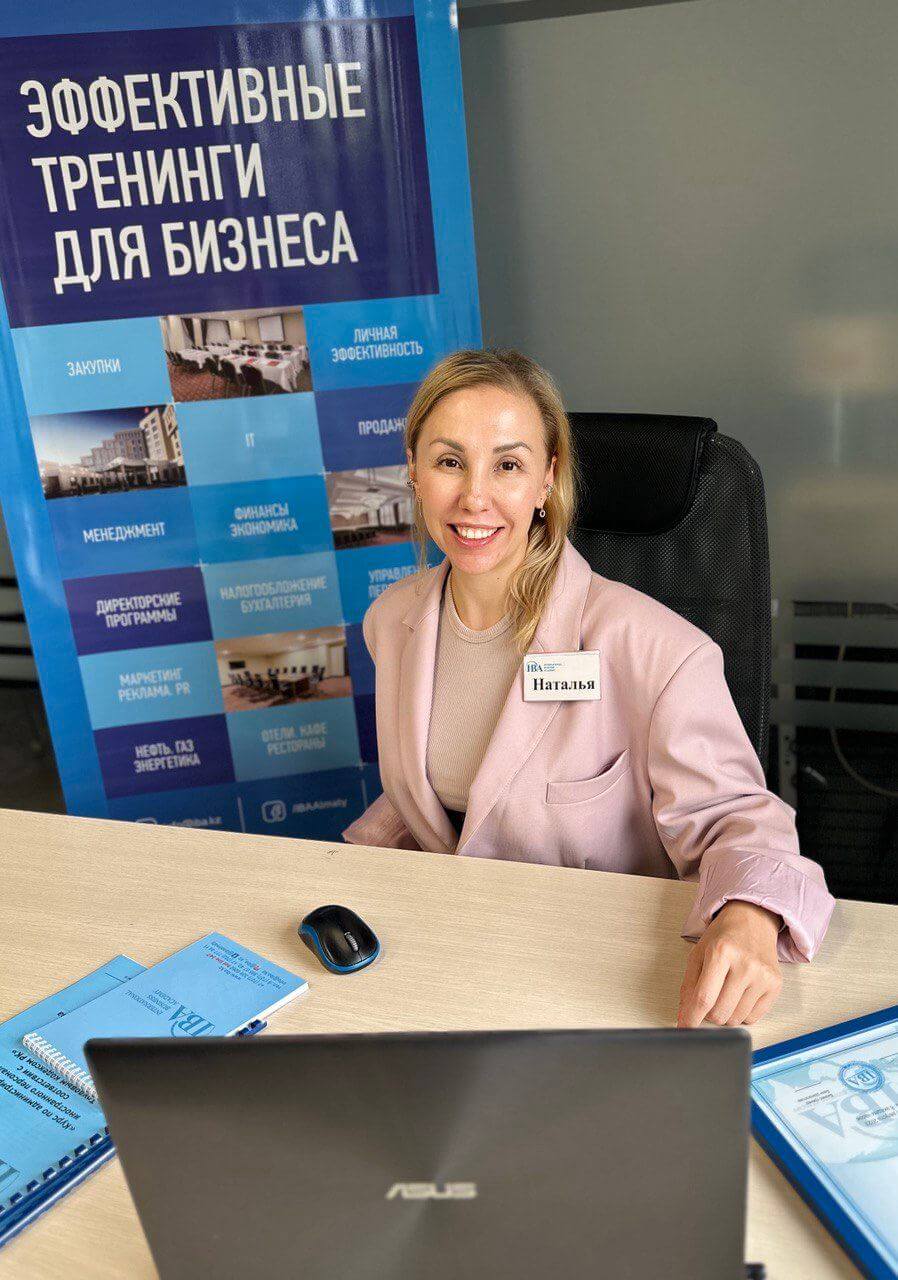

The seminar can be held online on the official International Business Academy platform. On completion of the training you will be given a link to the recording, which will be available for one month.
*dates are subject to additional confirmation
excluding VAT
* VAT of 16% will be added to the invoice
Programme goal:
Training managers and specialists in methods of building a real rather than formal, risk-based Anti-Bribery Management System (ABMS) and integrating it into the company's existing management systems and processes, to obtain the maximum effect from the ABMS with minimal additional documentation under the requirements of ISO 37001.
The programme focuses on:
— Developing competencies in identifying, analysing and managing bribery risks
— Building effective and transparent decision-making processes
— Increasing the effectiveness of internal audit: moving from formal audit to a risk-based approach
— Creating a mature corporate anti-bribery culture — an environment intolerant of any manifestation of bribery
Objectives:
— Study the requirements of ISO 37001 for building an ABMS
— Master methods of identifying, analysing and evaluating bribery risk (ISO 31010), including the use of artificial intelligence
— Develop a risk-based model of ABMS processes taking the company's context into account
— Define process KPIs and key risk indicators
— Master methods of internal audit of the ABMS (ISO 19011)
— Consolidate the knowledge gained in practical cases, interactive games and group work (built on the Client company's business processes and its internal regulatory documentation).
Skills developed:
— Risk-based thinking — applying methods of analysing and evaluating bribery risks
— Strategic management — integrating compliance functions into the corporate structure
— Monitoring and control — evaluating the effectiveness of the ABMS
— Internal audit methods — planning and conducting an internal corruption risk analysis and an ABMS audit that brings value to the Company
— Developing the ABMS policy and regulations — managing documented information
— Data-driven decision-making.
Using artificial intelligence tools — mastering the skills of applying AI for analysing, planning and documenting processes; participants are given a ready-made prompt that they can use independently in their further work.
Expected changes in employees' work after the training:
— Managers are able to integrate compliance mechanisms into the company's existing processes
— Compliance officers know how to develop ABMS tools and use the information generated
— Legal services are able to analyse and minimise legal risks more effectively
— Internal auditors have increased the effectiveness of monitoring anti-corruption programmes
— HR specialists will be able to introduce anti-bribery training mechanisms
— The company's key managers have recognised the need for an ABMS and gained the skills to integrate the ABMS into their processes
Introduction
Getting acquainted/ introduction/ course overview/ participants introduce themselves
Understanding the organisation and its context
Understanding the organisation and its context in relation to risks and the company's structure.
The «5C» method, Michael Porter's «5 Forces», SWOT analysis, PEST analysis.
Interested parties, their requirements and expectations
Understanding interested parties. The link between interested parties and context.
Scope of the ABMS
Defining the scope of the ABMS and its link to context.
Anti-bribery management systems
The process approach. The link between context and processes.
The procedure for identifying processes — best practices.
Options for describing processes.
Process criteria (KPI)
Types of criteria: input KPI and output KPI.
The link between criteria and the company's strategy.
Identifying and evaluating bribery risk
Defining criteria for evaluating bribery risks.
Identifying and evaluating risks: methods and best practices.
Methodological recommendations on conducting an internal corruption risk analysis (from the Anti-Corruption Agency of the Republic of Kazakhstan).
Mental traps at the risk identification and evaluation stage.
Ways of visualising the results of evaluation: Risk maps, the Scoring model.
— Case on identifying the risks of an ABMS process
— Case on analysing the risks of an ABMS process
— Case on evaluating the current control procedures of an ABMS process
— Case: the scoring model as a tool for prioritising ABMS risks.
Leadership and commitment
The anti-bribery culture and methods of strengthening it.
The anti-bribery policy.
The relationship between context and the ABMS Policy.
Roles, responsibilities and authorities in the organisation
Best practices in defining ABMS functions.
Actions to address risks and opportunities
Developing risk mitigation measures.
Mental traps at the risk treatment stage.
Six ways of treating risk.
Choosing the risk treatment method.
Examples of risk treatment.
Anti-bribery objectives and planning to achieve them
Requirements for objectives.
The relationship between context, the Policy and the ABMS Objectives.
ABMS resources
Competence and the employment process.
Conflict of interest: ways of identifying it, best practices.
Communication and documented information
Staff awareness requirements.
Ways of communicating and documenting information.
Operations
Due diligence on counterparties: how to organise it — best practices.
— Case: Due Diligence
— Case: Financial and non-financial controls.
Anti-bribery commitments
Gifts, hospitality, donations and similar benefits.
Investigating and dealing with bribery.
Raising concerns.
Performance evaluation
Internal audit.
Drawing up the internal audit Programme.
Conducting internal audits of the ABMS.
Management review
Review by top management.
Review by the governing body.
Review by the compliance officer.
Improvement
Nonconformities, corrective actions and continual improvement.
The corrective action algorithm
Group game «interactive review of requirements and situations from ISO 37001»